About Aethelq
Why we're building this, and what it isn't yet.
Our Mission
To give clinicians — starting with doctors and medical students who don't have easy access to expensive, enterprise-only decision-support tools — a second set of eyes that shows its reasoning. This gap isn't confined to any one country; under-resourced clinical settings and overstretched training pipelines exist worldwide. Not a black box that spits out a diagnosis, but a transparent trail: which framework was checked, which red flags were screened for, which guideline a recommendation traces back to. The goal is a tool that makes clinical reasoning faster and safer to double-check, not one that replaces the judgment of the clinician using it.
Our Vision
We're building this in the open, in public beta, with real doctors and students as early testers — not launching fully-formed. Right now that means a small group of medical students and doctors we know personally, testing on fictional or de-identified cases while we work through security, compliance, and accuracy validation properly. We'd rather grow slowly and honestly than overclaim early. Where we're headed — deeper guideline coverage, stronger validation against real clinical outcomes, and eventually the compliance work (BAAs, formal HIPAA/regional privacy alignment) needed for real patient data — is a multi-year effort, and we intend to be upfront about how far along that road we actually are at each stage.
Who's Behind This
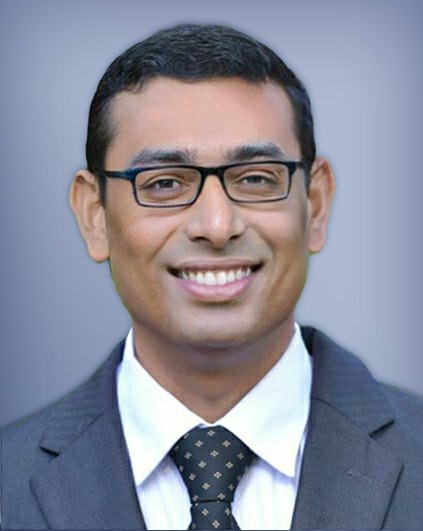
Dr. Ranjan Mallawaarachchi, MD, MBA
Board Certified Consultant · Digital Health Consultant · Healthcare AI & Digital Transformation Expert
Aethelq is built by a clinician-turned-digital-health consultant who has spent years advising on healthcare AI adoption and digital transformation, and who set out to build the tool he wished existed: one that reasons transparently, cites what it's basing a recommendation on, and says plainly when it isn't sure — rather than a confident-sounding black box.
Where AI Clinical Tools Fall Short — Including This One
We'd rather be upfront about the known, published limitations of AI in clinical decision support than let a polished interface imply more certainty than the field has actually earned. None of this is unique to us — it's true of every AI clinical tool on the market, including ones with much bigger budgets:
Hallucination risk
Large language models can generate plausible-sounding but incorrect clinical content, and this remains an active, unsolved problem — a 2025 Communications Medicine study found LLMs highly vulnerable to hallucination even under adversarial testing in clinical decision support contexts, and a 2025 systematic review catalogued the strategies being developed to mitigate it, precisely because no single fix exists yet. Source · Source
Explainability gaps
Even tools that claim to be "explainable" often produce explanations that don't actually reflect how the underlying model reached its answer — a 2025 meta-analysis of explainable AI in clinical decision support found persistent usability and trust challenges across the field. This is exactly why we show a step-by-step reasoning trace rather than just a final answer — but a reasoning trace still isn't a guarantee, and should be checked, not trusted blindly. Source
Alert fatigue
Clinical decision support systems that flag too much, too often, train clinicians to tune out — including real alerts. A systematic review of alert fatigue measurement found this is a well-documented, ongoing problem across CDS tools generally, not a solved one. Source
Automation bias
Clinicians can over-trust a confident-sounding AI recommendation, especially under time pressure — a documented safety risk discussed in recent narrative reviews of AI in patient care. This is exactly why every report carries the disclaimer it does, and why the final call always has to stay with the treating clinician. Source
One of Many, Not the Only One
Aethelq is one entrant in a fast-growing field of AI-assisted clinical tools being built worldwide, from large health-tech companies to independent teams like ours. We don't claim to be the best or the most validated — we're early, in testing, and building in public. What we're trying to offer is a specific combination: a transparent reasoning trail, evidence citations, deterministic safety checks that don't depend on the AI getting everything right, and honesty about what stage we're actually at.
Questions or feedback? support@aethelq.com